Royal Navy commanders gain cutting-edge synthetic training 11 months early
Published 26 August 2026
Royal Navy commanders can fight a simulated war at full operational complexity for the first time, thanks to a new synthetic training system. Procured and delivered by National Armaments Materiel, the Maritime Command and Staff Trainer (MCAST) reached initial operating capability 11 months ahead of schedule.
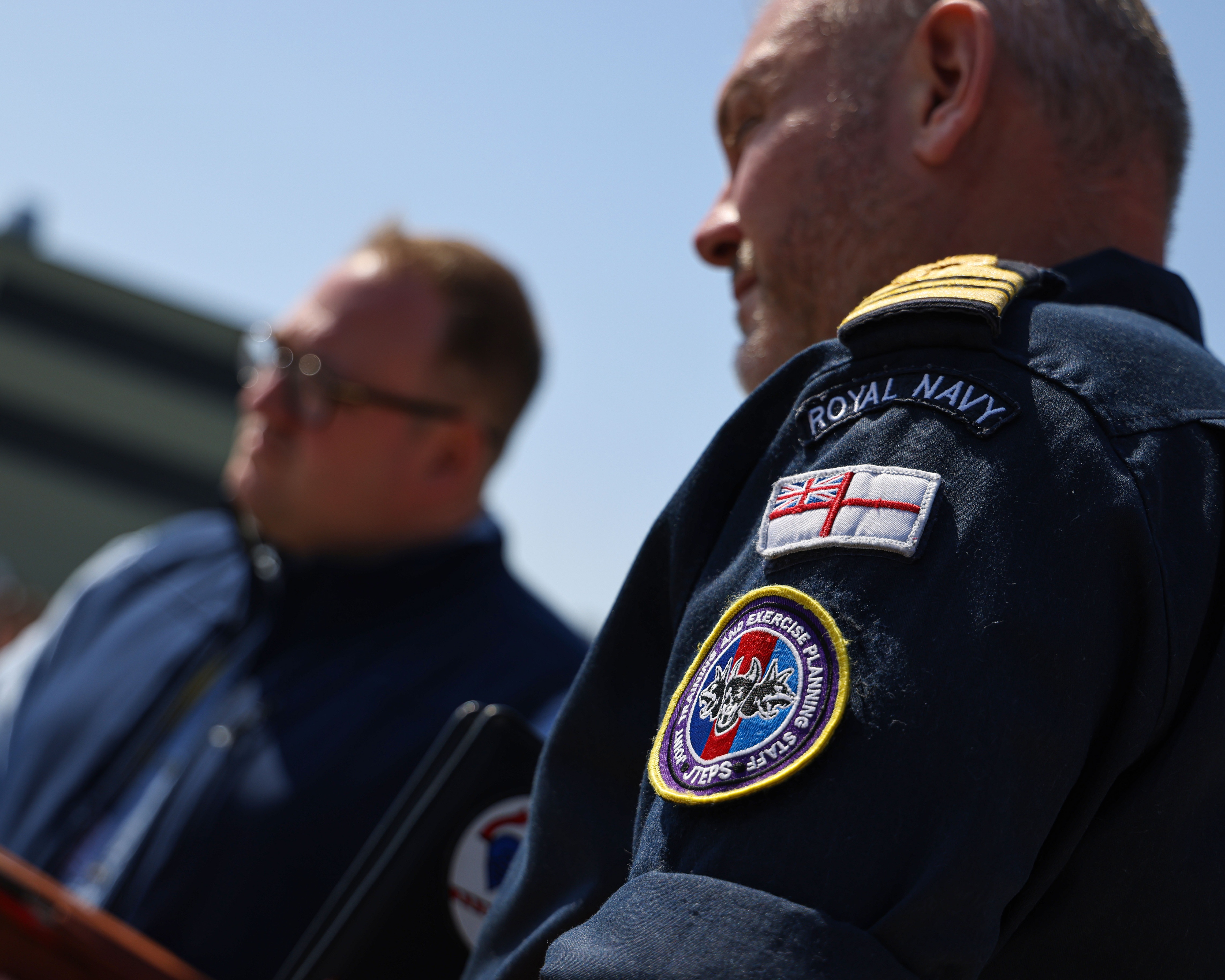
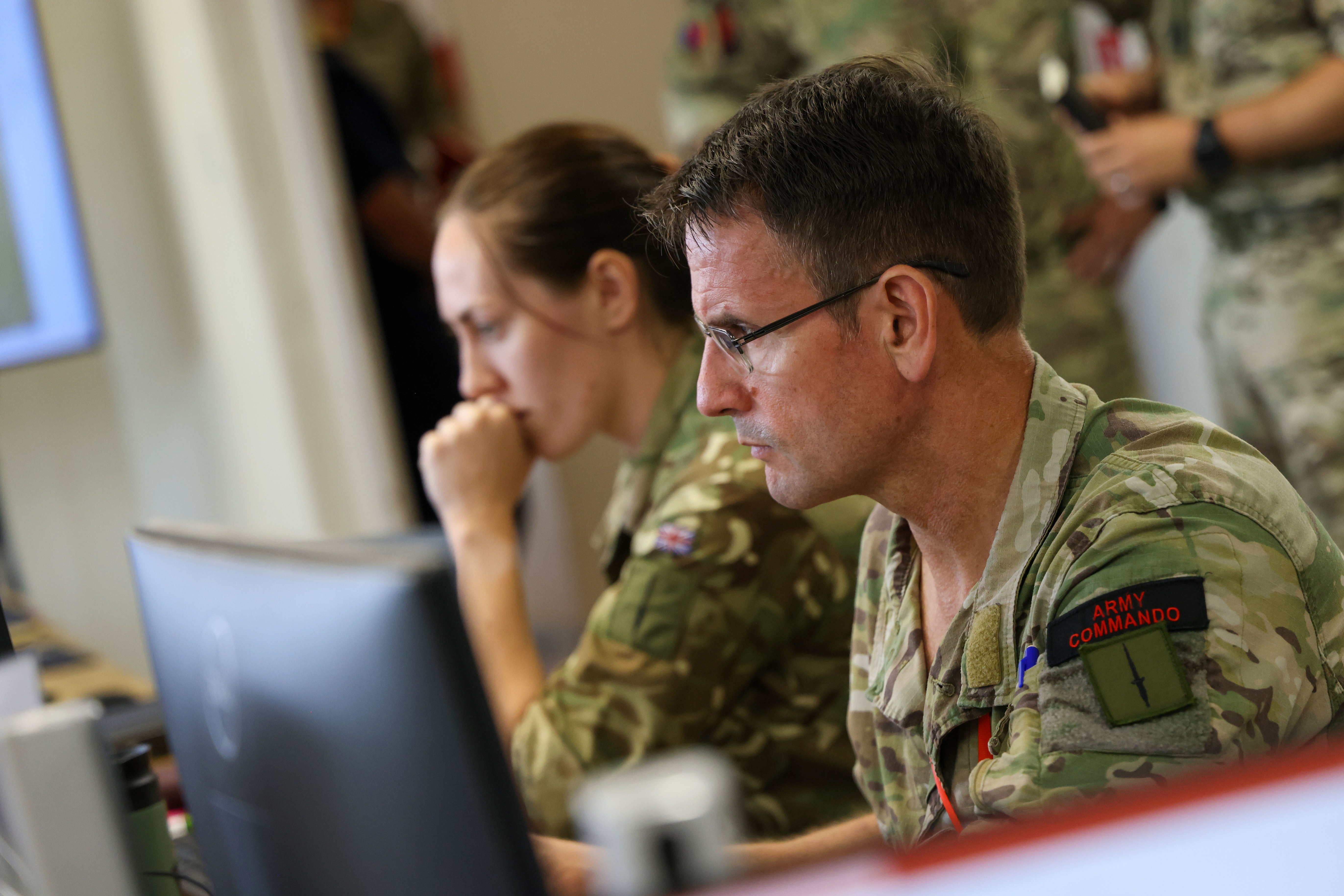
The system was validated during Exercise Virtual Warrior 26, a two-week exercise held at Rollestone Camp on Salisbury Plain in July. The exercise was delivered by QinetiQ and its subsidiary Inzpire, whose team of veterans designed and refereed the scenarios daily in conjunction with the Royal Navy. More than 240 Royal Navy staff were involved in the exercise during which Brigadier Richard Morris, Commander UK Commando Force, and his battle staff were put through their paces in a transition to war scenario set in the High North.
Commodore Andrew Ingham, Royal Navy Commander Fleet Operational Standards and Training, said:
“The pace of delivery from contract signing in July 2025 has been quite extraordinary and a testament to the hard work that has been put in by all parties. It was a real team effort.”
The MCAST system can simulate scenarios that would be impossible or unsafe to replicate in a live exercise, including casualties, logistical failures and breakdowns in command and control with NATO partners.
It also compresses time: scenarios that would take days to play out at sea can be reset overnight, allowing commanders to face the same situation with less fuel, fewer resources, and greater complexity the following morning. The synthetic battlespace operates at up to Secret classification across more than 100 user terminals, allowing those under training to use their real operational software.
Delivering the capability required significant problem-solving after planned infrastructure and operational networks were unavailable. The delivery team in NAD Materiel worked with another part of NAD Group - Defence Digital - and QinetiQ to develop an alternative solution at pace to recover the schedule.
A full system test was completed at QinetiQ's Portsdown Technology Park before the servers were moved to Wiltshire. After the contract was signed, the team compressed what would normally be a two-year planning cycle into nine months so that IOC could be achieved well ahead of schedule.
Mark Bunyan, NAD Group’s Synthetic Environments & Training Sub-Theme Leader, said:
“It’s been an incredible challenging year for the team and a real team effort across Navy, NAD group and industry – I’m hugely proud of what they have achieved delivering this key capability nearly a year ahead of approval.”
The system sits at the heart of the First Sea Lord's Royal Navy Ready Plan. The Royal Navy aims for a roughly even split between live and synthetic training by the end of the decade, with full operating capability for the system expected within approximately two years.